 Research programme of Elite Careers Strategy
SIG-108 · McKinsey & Company
McKinsey encourages responsible AI use for resume polishing, interview practice and concept preparation, while prohibiting real-time AI interview answers.
Global · Interviewing · SRC-072
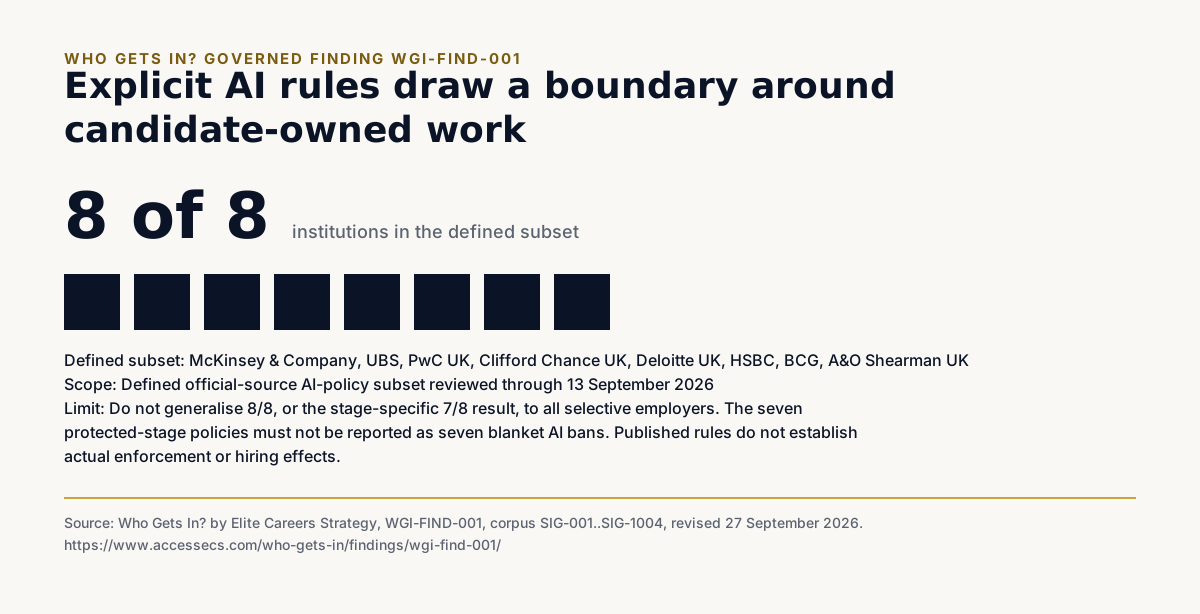
All eight institutions in the reviewed AI-policy subset publish an explicit boundary or control around candidate or employer AI use in recruitment. Seven of the eight explicitly protect at least one assessment or interview context through an AI restriction or candidate-owned-performance requirement; BCG is not included in that stage-specific numerator because the reviewed guidance does not establish a blanket live-assessment prohibition.
All eight institutions in the reviewed AI-policy subset publish an explicit boundary or control around candidate or employer AI use in recruitment. Seven of the eight explicitly protect at least one assessment or interview context through an AI restriction or candidate-owned-performance requirement; BCG is not included in that stage-specific numerator because the reviewed guidance does not establish a blanket live-assessment prohibition.
Numerator / denominator: 8 / 8
Reviewed scope: Defined official-source AI-policy subset reviewed through 13 September 2026
SIG-108 · McKinsey & Company
McKinsey encourages responsible AI use for resume polishing, interview practice and concept preparation, while prohibiting real-time AI interview answers.
Global · Interviewing · SRC-072
SIG-109 · McKinsey & Company
McKinsey Solve must be completed independently without applications, websites, AI tools or pre-prepared notes unless an approved accommodation applies.
Global · Solve · SRC-073
SIG-111 · UBS
UBS permits AI assistance with application documents where the content genuinely reflects the candidate's own skills, experience and understanding.
Global · Applications · SRC-074
SIG-112 · UBS
UBS requires assessment tasks to be completed independently and prohibits AI assistance.
Global · Assessments · SRC-074
SIG-113 · UBS
UBS prohibits AI-generated responses in recorded or virtual video interviews and prohibits AI recording, transcription or analysis of interviews.
Global · Interviews · SRC-074
SIG-118 · PwC
PwC UK prohibits unauthorised AI or third-party assistance in assessment responses and states it does not use AI to assess Early Careers candidate performance.
United Kingdom · Early Careers · SRC-076
SIG-120 · Clifford Chance
Clifford Chance London assessment days are normally in person and list case or commercial interviews, written work and group exercises for Training Contract and SPARK routes.
United Kingdom · London Training Contract and SPARK · SRC-078
SIG-172 · Deloitte
Deloitte UK permits responsible AI use in preparation, including researching a final-stage assessment topic and practising interviews, while requiring interview responses to be based on the candidate's own experiences and to remain authentic.
United Kingdom · Early Careers selection process · SRC-111
SIG-173 · Deloitte
Deloitte UK states that AI must not be used when completing its online assessments, including the Immersive Online Assessment, OneStop and Job Simulation, which must be completed independently and without AI assistance.
United Kingdom · Early Careers online assessments · SRC-111
SIG-174 · Deloitte
Deloitte UK states that AI must not be used during interviews, whether in person or virtual, and that interviews must be completed without AI assistance.
United Kingdom · Early Careers interviews · SRC-111
SIG-177 · HSBC
HSBC states that candidates may use generative AI to research HSBC and roles, help structure a CV or application where the content accurately reflects their own experience and skills, prepare for interviews, and organise or draft ideas where the final submission remains genuinely their own.
Global · Recruitment process · SRC-113
SIG-178 · HSBC
HSBC states that candidates must not use generative AI to generate responses during live or recorded interviews and must not submit work they cannot personally explain, validate or replicate if asked during recruitment.
Global · Recruitment interviews · SRC-113
SIG-180 · BCG
BCG explicitly permits thoughtful candidate use of generative AI for application support, including brainstorming, structuring a resume or responses, finding sources and practising interview questions, while requiring the candidate's authentic voice, experience and judgement to remain their own.
Global · Recruitment process · SRC-115
SIG-181 · BCG
BCG states that applications are reviewed by experienced recruiters, AI is not used to make hiring decisions, and hiring decisions remain with people; BCG also describes limited employer-side AI support including job recommendations and drafting interview questions.
Global · Recruitment process · SRC-116
SIG-182 · A&O Shearman
A&O Shearman states that candidates may use AI responsibly to complement rather than substitute their skills, including refining CVs, applications and written responses, while requiring honest representation of skills and experience.
United Kingdom · Early careers recruitment · SRC-117
SIG-183 · A&O Shearman
A&O Shearman's London early-careers FAQ states that it does not use AI at any point during its recruitment process and that all assessments and decisions are made by its team.
London · Early careers recruitment · SRC-118
WGI-AI-REVIEW-CC-20260919 · Clifford Chance
The official How we hire page expressly prohibits AI use in the Watson Glaser test. This supports a named-stage restriction, not an inference about every assessment.
United Kingdom · London early careers: Watson Glaser · Official source
WGI-AI-REVIEW-AOS-20260919 · A&O Shearman
The candidate charter asks that applications and assessments reflect the candidate's own thinking, experience and abilities. This is a candidate-owned-performance requirement, not a blanket AI ban.
Global candidate charter; applied here to UK comparison · Applications and assessments · Official source
Do not generalise 8/8, or the stage-specific 7/8 result, to all selective employers. The seven protected-stage policies must not be reported as seven blanket AI bans. Published rules do not establish actual enforcement or hiring effects.
Who Gets In? (Elite Careers Strategy), Explicit AI rules draw a boundary around candidate-owned work, revised 2026-09-19, https://whogetsin.com/findings/wgi-find-001
Evidence behind this page
Every signal this page cites, with the observation as coded, the passage recorded against the official page, the observation date and the source. Follow a signal ID for its full record; follow the source for the live page.
McKinsey encourages responsible AI use for resume polishing, interview practice and concept preparation, while prohibiting real-time AI interview answers.
Evidence passage recorded against the sourceAI may support preparation; real-time generated interview answers are not allowed.
Global · Interviewing · AI preparation · Observed 12 September 2026 · Verified 12 Sep 2026 · Source SRC-072 (mckinsey.com) · source record
McKinsey Solve must be completed independently without applications, websites, AI tools or pre-prepared notes unless an approved accommodation applies.
Evidence passage recorded against the sourceSolve prohibits AI tools, websites and prepared notes and requires independent participation.
Global · Solve · Assessment integrity · Observed 12 September 2026 · Verified 12 Sep 2026 · Source SRC-073 (mckinsey.com) · source record
UBS permits AI assistance with application documents where the content genuinely reflects the candidate's own skills, experience and understanding.
Evidence passage recorded against the sourceAI may help prepare application documents if the content genuinely reflects the candidate.
Global · Applications · AI preparation · Observed 12 September 2026 · Verified 12 Sep 2026 · Source SRC-074 (ubs.com) · source record
UBS requires assessment tasks to be completed independently and prohibits AI assistance.
Evidence passage recorded against the sourceAssessment tasks must be completed independently without AI assistance.
Global · Assessments · Assessment integrity · Observed 12 September 2026 · Verified 12 Sep 2026 · Source SRC-074 (ubs.com) · source record
UBS prohibits AI-generated responses in recorded or virtual video interviews and prohibits AI recording, transcription or analysis of interviews.
Evidence passage recorded against the sourceVideo answers must be the candidate's own; AI interview analysis is prohibited.
Global · Interviews · Interview integrity · Observed 12 September 2026 · Verified 12 Sep 2026 · Source SRC-074 (ubs.com) · source record
PwC UK prohibits unauthorised AI or third-party assistance in assessment responses and states it does not use AI to assess Early Careers candidate performance.
Evidence passage recorded against the sourceAssessments must be independent; PwC says AI does not assess Early Careers candidate performance.
United Kingdom · Early Careers · AI assessment policy · Observed 12 September 2026 · Verified 12 Sep 2026 · Source SRC-076 (pwc.co.uk) · source record
Clifford Chance London assessment days are normally in person and list case or commercial interviews, written work and group exercises for Training Contract and SPARK routes.
Evidence passage recorded against the sourceLondon assessment days are in person except exceptional virtual circumstances and include multiple exercises.
United Kingdom · London Training Contract and SPARK · Stage architecture · Observed 12 September 2026 · Verified 12 Sep 2026 · Source SRC-078 (jobs.cliffordchance.com) · source record
Deloitte UK permits responsible AI use in preparation, including researching a final-stage assessment topic and practising interviews, while requiring interview responses to be based on the candidate's own experiences and to remain authentic.
Evidence passage recorded against the sourceAI may be used for preparation, including final-stage topic research and interview practice; interview responses must remain based on the candidate's own experiences and authentically reflect them.
United Kingdom · Early Careers selection process · AI preparation · Observed 13 September 2026 · Verified 13 Sep 2026 · Source SRC-111 (deloitte.com) · source record
Deloitte UK states that AI must not be used when completing its online assessments, including the Immersive Online Assessment, OneStop and Job Simulation, which must be completed independently and without AI assistance.
Evidence passage recorded against the sourceAI must not be used when completing online assessments; named assessments must be completed independently and without AI assistance.
United Kingdom · Early Careers online assessments · AI restriction - online assessment · Observed 13 September 2026 · Verified 13 Sep 2026 · Source SRC-111 (deloitte.com) · source record
Deloitte UK states that AI must not be used during interviews, whether in person or virtual, and that interviews must be completed without AI assistance.
Evidence passage recorded against the sourceAI must not be used during interviews, whether in person or virtual; interviews must be completed without AI assistance.
United Kingdom · Early Careers interviews · AI restriction - interview · Observed 13 September 2026 · Verified 13 Sep 2026 · Source SRC-111 (deloitte.com) · source record
HSBC states that candidates may use generative AI to research HSBC and roles, help structure a CV or application where the content accurately reflects their own experience and skills, prepare for interviews, and organise or draft ideas where the final submission remains genuinely their own.
Evidence passage recorded against the sourceAcceptable GenAI use includes research, structuring a CV or application, interview preparation and organising or drafting ideas, provided the content remains accurate and genuinely the candidate's own.
Global · Recruitment process · AI preparation and application · Observed 13 September 2026 · Verified 13 Sep 2026 · Source SRC-113 (hsbc.com) · source record
HSBC states that candidates must not use generative AI to generate responses during live or recorded interviews and must not submit work they cannot personally explain, validate or replicate if asked during recruitment.
Evidence passage recorded against the sourceUnacceptable GenAI use includes generating responses during live or recorded interviews and submitting work the candidate cannot personally explain, validate or replicate.
Global · Recruitment interviews · AI restriction - interview · Observed 13 September 2026 · Verified 13 Sep 2026 · Source SRC-113 (hsbc.com) · source record
BCG explicitly permits thoughtful candidate use of generative AI for application support, including brainstorming, structuring a resume or responses, finding sources and practising interview questions, while requiring the candidate's authentic voice, experience and judgement to remain their own.
Evidence passage recorded against the sourceBCG says AI may support brainstorming, structure, source-finding and interview practice, but should support rather than replace the candidate's thinking, voice and experience.
Global · Recruitment process · AI preparation and application · Observed 13 September 2026 · Verified 13 Sep 2026 · Source SRC-115 (careers.bcg.com) · source record
BCG states that applications are reviewed by experienced recruiters, AI is not used to make hiring decisions, and hiring decisions remain with people; BCG also describes limited employer-side AI support including job recommendations and drafting interview questions.
Evidence passage recorded against the sourceAll applications are reviewed and evaluated by experienced recruiters; AI is never used to make hiring decisions; decisions are made by experienced recruiters and hiring managers.
Global · Recruitment process · Employer AI and human decision · Observed 13 September 2026 · Verified 13 Sep 2026 · Source SRC-116 (careers.bcg.com) · source record
A&O Shearman states that candidates may use AI responsibly to complement rather than substitute their skills, including refining CVs, applications and written responses, while requiring honest representation of skills and experience.
Evidence passage recorded against the sourceA&O Shearman says AI can help refine a CV, application and written responses, but should complement rather than substitute the candidate's voice and capabilities and must not misrepresent skills.
United Kingdom · Early careers recruitment · AI preparation and application · Observed 13 September 2026 · Verified 13 Sep 2026 · Source SRC-117 (careers.aoshearman.com) · source record
A&O Shearman's London early-careers FAQ states that it does not use AI at any point during its recruitment process and that all assessments and decisions are made by its team.
Evidence passage recorded against the sourceWe do not use AI at any point during our recruitment process; all assessments and decisions are made by our team.
London · Early careers recruitment · Employer AI and human decision · Observed 13 September 2026 · Verified 13 Sep 2026 · Source SRC-118 (careers.aoshearman.com) · source record
Corpus release SIG-001..SIG-1004 · signal register · source register · methodology
This page: revised . Corpus: 1004 dated facts (signals) from 383 official source records, last canonical update . Release notes